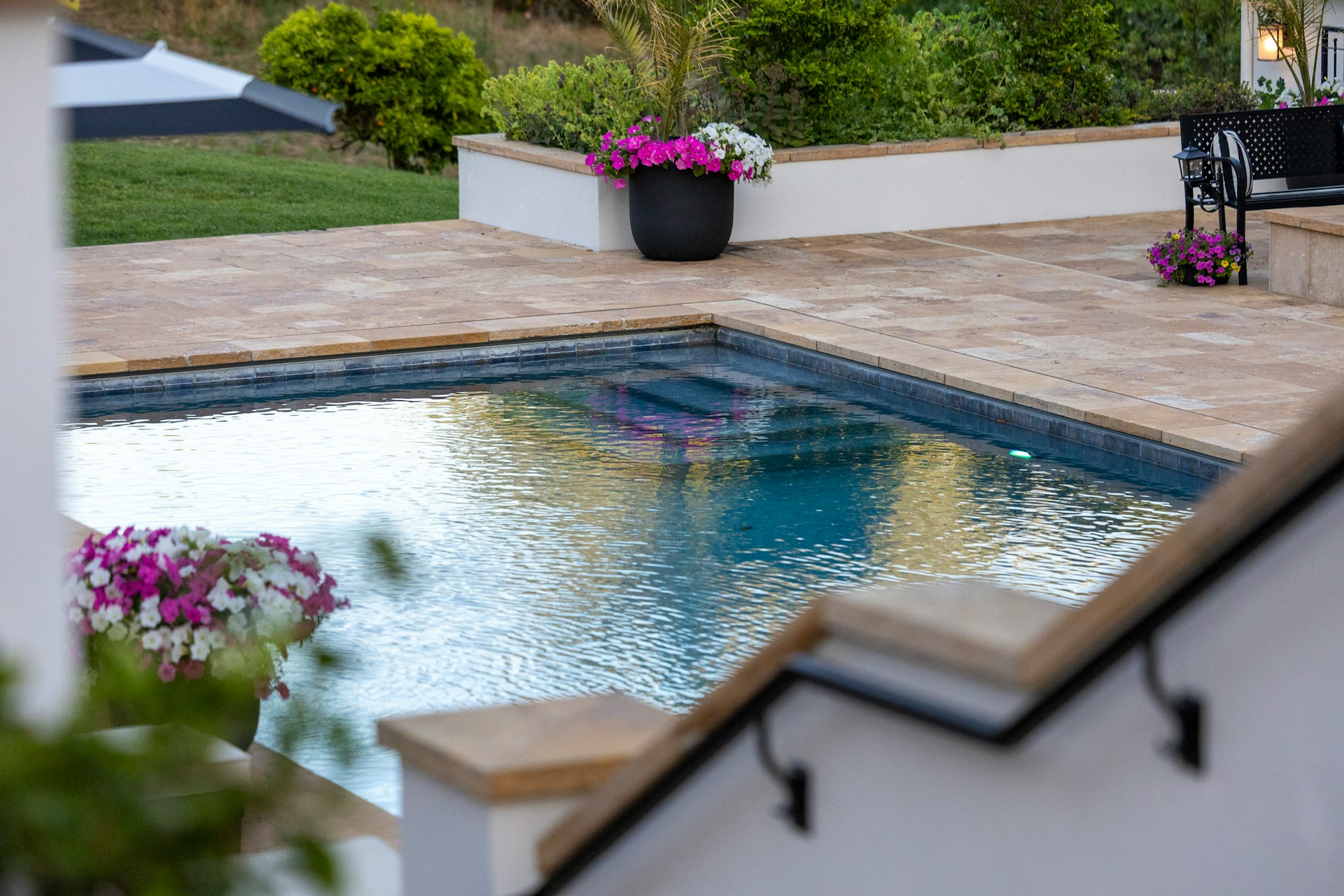
Cracked concrete, puddles that linger, and deck areas that no longer sit level can make a pool space harder to enjoy. Around Los Angeles pools, water from splashing, rain, irrigation, and cleaning needs a clear path away from the deck. When it does not, the surface and the ground below it can suffer over time.
We often recommend looking at pavers as part of the full solution, not as a quick cover-up. With the right design, grading, and base preparation, pavers can help manage surface water and handle minor movement while giving your pool area a fresh new look.
Protect Your Pool Deck From Water Damage and Cracks
A pool deck deals with a lot of moisture, even when the pool is not in use. Water can run off the deck after a swim, collect beside coping, or travel from nearby planters and irrigation. If it remains near the pool edge or seeps below the surface, it may contribute to settling, stains, shifting, and damaged deck materials.
Pavers are made of individual units rather than one large, rigid slab. That design can make them a flexible choice for many outdoor spaces. If a small area moves, the result may be less noticeable than a long crack running across a concrete deck.
Still, pavers do not solve every problem by themselves. Before we recommend a new deck surface, we look for the source of the water and movement. A plumbing leak, serious soil issue, failing coping, or poor drainage route needs attention before any new hardscape goes in.
Why Water and Soil Movement Crack Pool Decks
Concrete is strong, but it is also rigid. When the ground beneath a slab settles or shifts, the slab may crack because it cannot flex with those changes. Small cracks can grow, edges can become uneven, and gaps may appear around pool coping or adjoining walkways.
In our work, we see several conditions that can create trouble around a pool deck:
Soil that was not prepared or compacted properly
Water runoff from planters, roofs, or surrounding yard areas
Irrigation leaks or sprinkler spray that repeatedly wets the same spot
Deck slopes that direct water toward the pool or against the home
Base materials that no longer provide even support
Drainage matters because water below a deck can weaken the support it depends on. Water flowing across the surface can also leave dirt, staining, and debris in places you do not want it. Whether you choose concrete, pavers, or another material, we plan grading and drainage together with the deck itself.
How Pavers Handle Drainage Better Than Concrete
Pavers can offer a practical advantage over a single poured slab because each piece is separate. With a properly prepared base below, the paver surface can better tolerate minor ground movement. Instead of one visible crack extending across the deck, a localized area may be reset if it settles.
The joints between pavers also play a role in water management. Depending on the selected paver system and joint material, some surface water can move through the joints into the base below. That does not mean water should be allowed to sit under the deck without control. The base, grading, and drainage plan must work together so water is directed or dispersed appropriately.
Repairability is another reason many clients consider paver installation in Los Angeles. If a portion of the deck becomes stained, damaged, or uneven, we can often lift the affected pavers, correct the area beneath them, and reinstall the surface. This approach can preserve the look of the rest of the patio, walkway, or pool deck.
What Quality Paver Installation in Los Angeles Requires
A lasting paver deck starts before the first paver is placed. We evaluate existing cracks, deck elevations, water flow, nearby planting areas, irrigation lines, pool equipment access, and the connection between coping and the new deck. Those details help us build a plan that fits the property instead of forcing a standard layout onto it.
A quality installation generally includes several layers working as one system:
Excavation to create room for the planned base and paver depth
Subgrade preparation and compacted aggregate base materials
Accurate grading to move water in the intended direction
Edge restraints and bedding material that support the paver pattern
Carefully placed pavers with stabilized joints
Drainage components may include drains, channel drains, swales, or other site-specific features. We also consider where water will go after it leaves the deck. A change that helps one area should not send runoff toward a structure or create problems near an adjacent property.
Where Pavers Work Best Around Existing Pools
Pavers can be a strong fit for cracked pool decks, uneven walkways, worn patios, and outdoor areas that need a more unified design. They can also connect a renovated pool to a spa, outdoor kitchen, fire feature, or seating area without making the yard feel like a collection of separate projects.
Some conditions need correction before a paver deck can perform as intended. Major movement in the pool shell, active plumbing leaks, serious drainage failures, unstable soil, or damaged coping should be reviewed first. Covering those concerns with a new surface may hide the symptoms for a while, but it does not fix the cause.
Design choices matter, too. We help you consider paver color, shape, texture, slip resistance, heat retention, and how the material works with your home’s style and planting areas. A thoughtful plan can make the entire outdoor space feel connected while still keeping walking paths, gathering areas, and the pool edge functional.
Start Your Pool Deck Upgrade with a Site Plan
Pavers can help with many drainage and cracking concerns, but performance depends on the complete system below and around them. A sound plan looks at water flow, soil conditions, deck elevation, coping details, and the features you want to add to the space.
Before choosing a final surface, take stock of where water collects, where cracks are growing, and how you use the area around your pool. Reviewing those details early helps create a deck design that looks good, drains properly, and remains easier to maintain over the years.
Get a Pool Deck Built for Lasting Performance
Smart Swim can help you choose materials and layouts that suit your pool area and daily use. Our team provides paver installation in Los Angeles with attention to proper preparation and a clean finished appearance. When you are ready to discuss your project, contact us to get started.