

Solving Pool Drainage System Challenges in Flat Los Angeles Yards
Drainage Solutions That Protect Your Dream Backyard
A great pool is more than pretty water and nice tile. If the drainage is wrong, even the best backyard can turn into a soggy mess after one strong storm or a long watering cycle. In flat Los Angeles yards with clay-heavy soil, water tends to sit right where you do not want it, around the pool, on the deck, and near your home.
Poor planning can lead to slippery decks, water staining, loose pavers, and even stress on the pool structure. Plants can drown, grout lines can grow mildew, and low spots can turn muddy every time you run the irrigation. When we design a pool drainage system in Los Angeles, we focus on moving water quietly and reliably in the background so you can enjoy the space in the foreground.
In this article, we will walk through why flat yards are tricky, what a smart drainage system looks like, and how thoughtful design can keep your pool, patio, and landscaping dry and safe year-round.
Why Flat Los Angeles Yards Create Drainage Headaches
Many Los Angeles lots are almost pancake flat. During construction, the soil often gets compacted by heavy equipment, and that tight ground does not let water soak in very fast. A lot of areas also have clay-rich soil, which acts almost like a shallow bowl when it gets wet.
Those conditions make it hard to send water away from your pool and outdoor living areas using gravity alone. Even a small mistake in slope can mean water runs back toward the pool edge or stalls in the middle of the patio.
Local weather patterns add more pressure on a weak drainage layout. For example, you might see:
Sudden summer storms that dump a lot of water in a short time
Longer irrigation cycles during dry, hot stretches
Overflow from active pool use, spa spillovers, and cleaning
When those all hit a flat yard with poor drainage, you quickly see puddles that hang around, washed-out planter beds, and damp zones where the pool and deck meet.
Core Principles of a Reliable Pool Drainage System
Good drainage is not about one big drain. It is about many small choices that all work together. The first step is shaping subtle slopes into hardscape and soil. We aim for surfaces to shed water gently, not so steep that it feels uncomfortable, but just enough that water knows where to go.
A solid pool drainage system in Los Angeles usually combines:
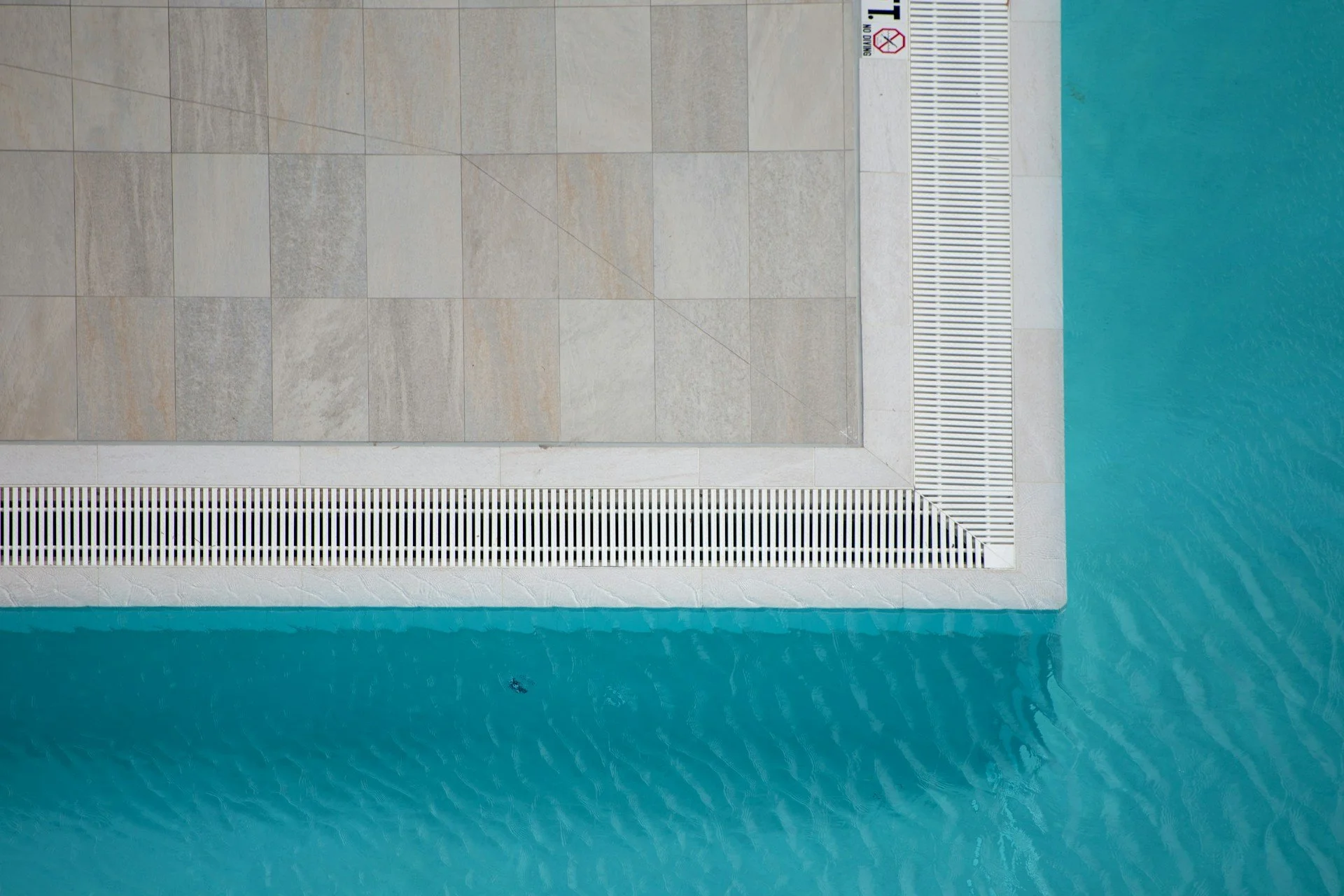
Surface drains, like channel drains, trench drains, and spot drains
Subsurface drains, like perforated pipes in gravel trenches
Planned discharge points, where water exits safely and legally
Different types of water should be managed on their own paths when possible. Deck water from rain and splash-out, roof runoff from downspouts, and yard drainage from lawns and planters all build up at different times and rates. If everything is forced into one undersized line, it can back up and push water right where you do not want it.
We also pay close attention to hydrostatic pressure. When water collects along pool walls or under hardscape, it can press against structures. Over time, this can lead to movement, cracks, or lifted sections. Keeping water away from the shell and footings helps protect the long-term stability of your backyard.
Smart Strategies for Flat Yards in Los Angeles
Flat yards call for creative but simple tactics. We start with micro-grading, tiny changes in height across the deck and lawn that you barely feel but water clearly follows. That may mean a very slight tilt of pavers or a gentle roll in the turf.
From there, we often combine several drainage tools:
Low-profile trench or slot drains along patio edges or at doorways
Discreet channel drains built into hardscape patterns
Yard drains set in turf, gravel, or planters to catch low spots
Subsurface drain lines to carry water away out of sight
A key part of design is tying drains into the rest of the yard. Downspouts can feed into underground pipes that join deck drains, which then discharge at an approved location, into a dry well, or into a designed landscape swale. Planters can be shaped to receive and slow some runoff instead of letting it race across the deck.
On very flat or landlocked properties, gravity may not be enough. In those cases, we may look at:
Sump pits that collect water from several drains
Sump pumps that push water to a higher discharge point
Dry wells where soil conditions allow, to store and slowly release water
The goal is always the same: move water off the surfaces you use and away from structures, without making the yard look like a drainage project.
Integrating Drainage with Decks, Landscaping, and Features
Deck material has a big impact on drainage decisions around a pool. For example:
Concrete decks rely on good slope, control joints, and edge drains
Paver decks can use permeable joints and drains hidden along borders
Porcelain or large-format slabs often need slot drains at low edges
Wood or composite decks need gaps and planned outlets below
Landscaping is another powerful tool. Plant beds can be placed where water naturally wants to go, then shaped with a slight hollow so they receive extra runoff. Deep-rooted plants help open the soil, and smart grading keeps water from sitting right at the pool beam or under walls.
Specialty features need protection too. Raised spas, water walls, fire features, and outdoor kitchens all have footings, gas lines, and electrical runs that should not sit in wet soil. We plan:
Drainage paths behind and around walls and raised elements
Gravel and perforated pipe at the base of tall features
Safe routes for water to move around outdoor kitchens, not through them
When drainage is blended into the overall design, you get a clean look on the surface and a quiet, hidden system underneath.
Seasonal Stress Tests for Your Backyard Drainage
Mid-summer is a great time to see how well your backyard handles water. Sprinklers run longer, kids splash more, and hot days make you notice any slimy or damp areas much faster.
You can gently stress test your yard by:
Running a hose at the high end of the deck and watching where water goes
Noticing how long puddles last after pool use or cleaning
Checking planters and lawn edges for erosion lines or exposed roots
Looking for mildew or algae growth on grout lines, joints, and steps
Here are some simple warning signs that drainage might need work:
Puddles that last more than a full day in sunny spots
Dark, damp bands of soil along the pool or spa edge
Shifting pavers, loose tiles, or small cracks near low areas
Planters that stay soggy, smell musty, or have plants constantly failing
Catching these clues early can help prevent bigger issues with your pool structure, deck, and landscaping as time goes on.
Work with a Builder Who Designs for Water First
When planning a pool or a full outdoor living space, it is tempting to focus only on shape, finishes, and fun features. But the yards that hold up best over time are the ones where water management is treated as part of the design from day one.
On our Los Angeles projects, we study the grading, soil conditions, existing drains, and city requirements, then match them with how you actually plan to use your space. That way, the pool drainage system in Los Angeles that supports your dream backyard is built right into the plan, not tacked on at the end.
Get Started With Your Project Today
If you are ready to protect your property with a reliable pool drainage system in Los Angeles, our team at Smart Swim is here to help you plan the right solution. We will assess your space, explain your options clearly, and recommend a system tailored to your pool and landscape. To schedule a consultation or ask a question, simply contact us and we will follow up promptly.