

Protecting Your Hillside Pool From LA’s Next Big Storm
Pool drainage might not be the first thing you think about when you look out over a beautiful hillside view, but it is one of the most important parts of keeping that view safe. For hillside homes in Los Angeles, a smart pool drainage system is about protecting your slope, your pool, and your investment. When heavy rain hits, water will always look for a path, and if it cannot leave safely, it can cause real trouble.
Our local climate makes this even more important. We get long dry stretches, then sudden strong winter storms, and we also live with wildfire risk. Burned hillsides shed water faster, which sends more runoff toward your property. A well-planned pool drainage system in Los Angeles helps keep that water away from your home, your pool shell, and your slope so you are not dealing with emergencies every rainy season.
With good design, your hillside pool can handle those big storms while still feeling like a calm retreat on sunny days. Our goal is to show how drainage works, why hillside homes need special care, and what you can do during the summer planning window to get ready before the next round of storms.
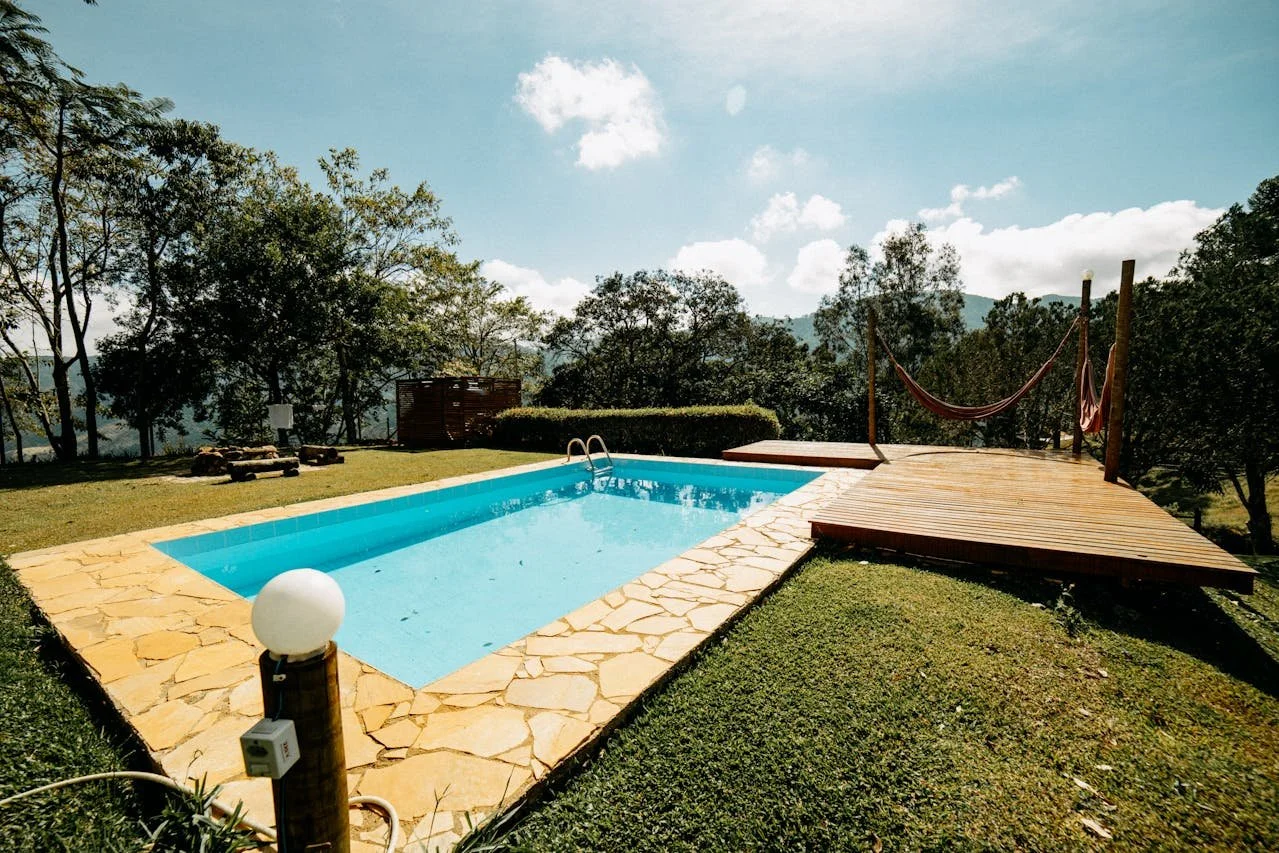
How Hillside Terrain Shapes Your Pool Drainage Design
Every hillside lot is different, and that changes how water behaves around your pool and outdoor living area. The angle of the slope, the height difference between your pool and your house, and the way your yard is terraced all guide water flow
Soil type matters a lot too. Expansive clay can swell when wet and shrink when dry, which can push on pool walls and decks. Sandy or looser soils let water move through more easily, which can lead to erosion if the water is not controlled. On steep hills, runoff can speed up, pick up debris, and end up in your pool or against your foundations.
Common hillside risks include:
Hydrostatic pressure pushing behind pool walls
Soil under decks or footings washing out and settling
Slow soil creep that shifts patios and hardscapes over time
Surface runoff carrying ash, leaves, and mud into the pool
Because of these variables, no two hillside drainage plans should be the same. A safe design often needs input from geotechnical reports, proper retaining walls, and respect for local hillside rules. The way we place drains, route pipes, and grade decks has to match the exact shape of your lot, not a one-size-fits-all layout.
Key Components of a Safe Hillside Pool Drainage System
A good hillside drainage system is a team effort between several parts that all move water away from slopes and structures. When they are planned to work together, storms become much less stressful.
Common components around hillside pools include:
Deck drains that collect water from pool decks and patios
Perimeter drains along walls, fences, or the toe of a slope
French drains with gravel and perforated pipe to catch seepage
Area drains in low spots of lawns or courtyards
Sub-drain systems under decks, planters, and sometimes under pool structures
Overflow lines from the pool also play a big role. They give extra water a safe exit so it does not spill over onto hillside soils or into a neighbor’s yard. Backwash discharge from your filter must be routed to approved locations, not just sent onto the slope. All that water needs a planned path, not a guess.
Hardscaping and landscaping finish the picture. Graded decks that gently pitch toward drains, permeable pavers, gravel bands along walls, and drained planters all help manage water. When the pool, patios, and yard are designed together, you get an outdoor space that looks beautiful and quietly handles storms in the background.
Codes, Permits, and Hillside Requirements in Los Angeles
In Los Angeles, hillside homes come with special rules, especially when a pool sits near a slope. Local building and safety standards guide how close a pool can be to the top or bottom of a hill and how drainage should be handled so water does not threaten other properties or public areas.
Key points that often affect drainage plans include:
Hillside ordinances that shape grading and retaining wall design
Pool setback requirements from steep slopes or property lines
Restrictions on sending pool or deck water over sidewalks or to neighbors
Drainage details can affect plan check reviews and inspection sign-offs. Insurance providers also care about slope stability and water control around structures. A design that looks good on paper but ignores drainage rules can lead to redesigns, delays, and corrections during construction.
This is why hillside pools call for a builder who understands both pool design and local code requirements. When structural plans, slopes, and drainage all match what the city expects, the process tends to move more smoothly from first concept to final inspection.
Seasonal Strategies to Protect Your Pool and Slope
Early summer is a perfect time to think about drainage, even while the weather is dry and you are using the pool the most. This is the window when work on decks, drains, and slopes is easiest, before the calendar turns toward fall storms and shorter days.
A simple preseason checklist for hillside pool owners can include:
Clearing leaves and debris from all deck and area drains
Running water through drains to confirm they flow freely
Confirming that overflow lines keep the water level steady
Taking a careful look at slopes and retaining walls for new cracks, bulges, or soft spots
Catching problems now can help prevent mudflows across your deck, heaving concrete, and surface damage on the pool interior after strong storm events. With more intense rain patterns becoming common in Southern California, a little preventive care around drainage can pay off in peace of mind when the skies finally open up.
Smart Drainage Upgrades for New Builds and Renovations
If you are planning a new pool or a major remodel, drainage upgrades can be built into the design from the start. Modern systems can move water more safely and give you more control when storms arrive while power is stretched or access is limited.
Thoughtful upgrades might include:
Larger capacity deck and area drains for heavy downpours
Smart pump controls and backup power for key drainage pumps
Improved grading that directs water around, not across, outdoor rooms
Sub-drains and waterproofing behind new walls or planters
Renovations are also a chance to rethink your whole outdoor living setup. Reworking landscaping so it slows and absorbs surface runoff, reshaping deck areas, and adding better sub-drains can help older hillside pools adjust to current conditions. When a pool, spa, outdoor kitchen, seating areas, and fire features are planned with long-term slope stability in mind, you end up with a hillside oasis that feels relaxed and stays protected even when the weather is not.
Get Started With Your Project Today
If you are ready to resolve standing water and protect your investment, we can design a custom pool drainage system in Los Angeles that fits your property and budget. At Smart Swim, we assess your pool area, identify problem spots, and recommend the most effective solution for long-term performance. Reach out today and let our team walk you through your options or schedule a site visit when it works for you. If you have questions or want to set up an appointment, simply contact us.